Computational Fluid Dynamics
3% Resistance Reduction = 6-Figure Annual Savings
In this article
3% Resistance Reduction = 6-Figure Annual Savings
That’s not theory. That’s operational mathematics.
Most vessels don’t have a design problem. In many cases, the real issue lies in flow behaviour.
Computational Fluid Dynamics (CFD) is no longer just a naval architect’s modelling tool — it is now a decision-making instrument.
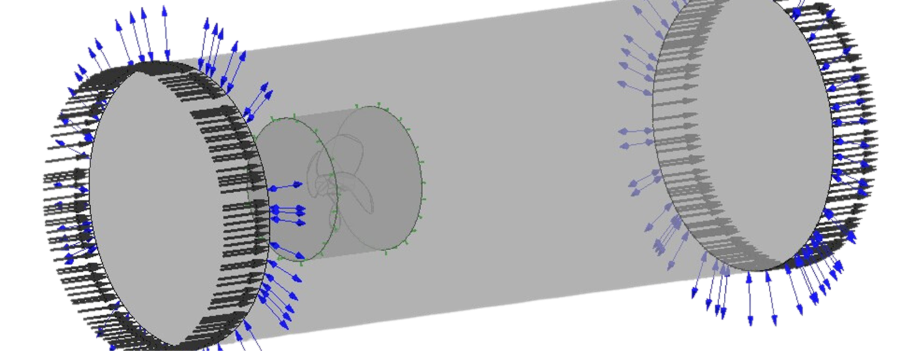
At its core, CFD numerically solves the Navier–Stokes equations to simulate how water and air interact with a vessel. But commercially, what it really delivers is clarity before capital is committed.
Where CFD Creates Measurable Impact
- Total Resistance = Still Water + Wave + Wind
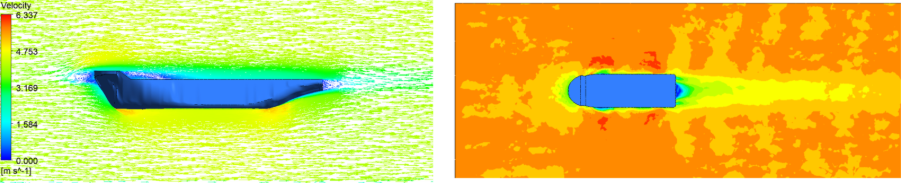
CFD evaluates resistance holistically by combining:
- Still water resistance
- Wave-induced resistance
- Wind resistance (open wind test & statistical methods)
This integrated assessment provides the true operational resistance profile of a vessel — not just calm-water estimates.
Even a 2–4% reduction in total resistance can significantly improve fuel consumption and support compliance under frameworks governed by the International Maritime Organization, including EEXI and CII requirements.
Hydrodynamic efficiency is now a regulatory and commercial variable.
- Energy Saving Devices — Feasibility Before Retrofit
CFD enables simulation and validation of:
- Wind Assisted Propulsion Systems (WAPS)
- Air lubrication hull systems
- Hull form modifications
- Combined efficiency solutions
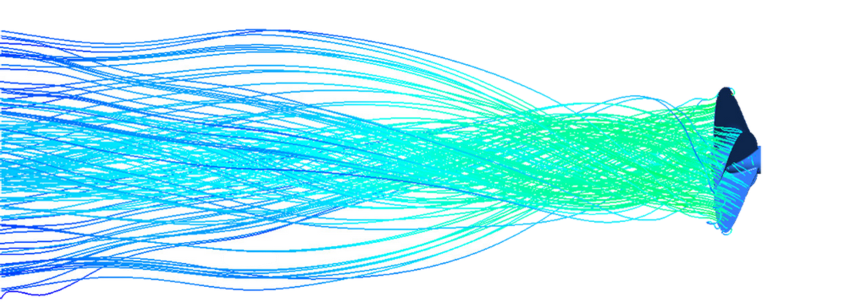
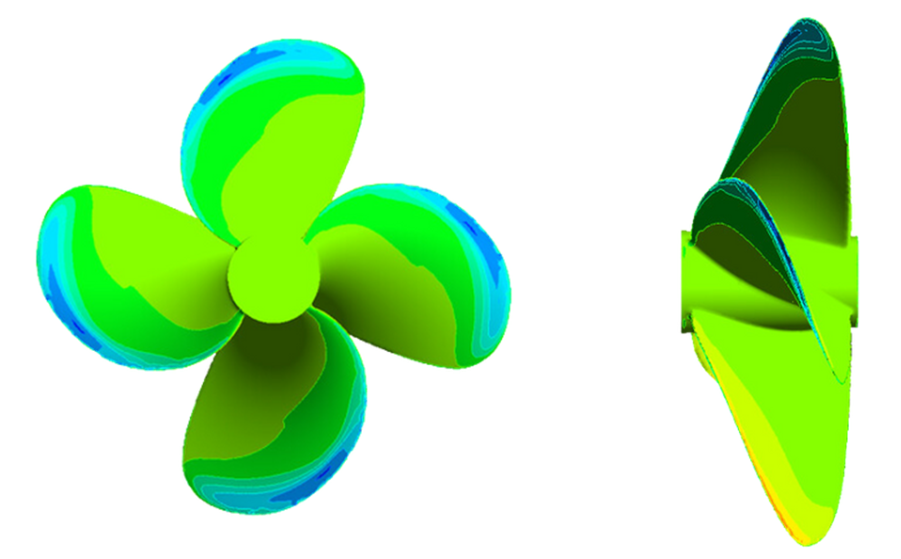
Instead of installing devices based on assumptions, owners can evaluate expected gains digitally — before entering drydock.
The goal is not modification. The goal is validated modification.
- Multiphase Simulation = Realistic Sea Behaviour
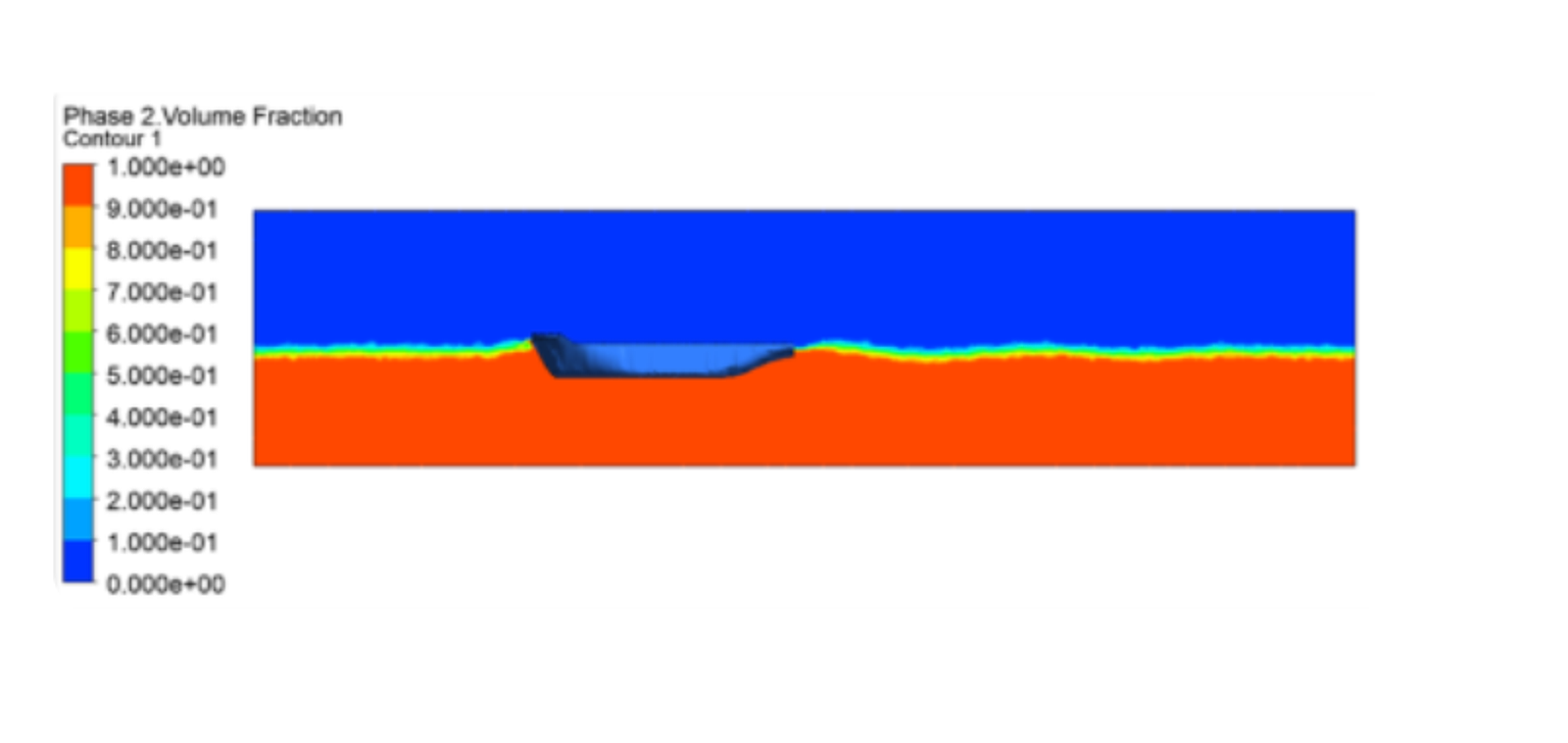
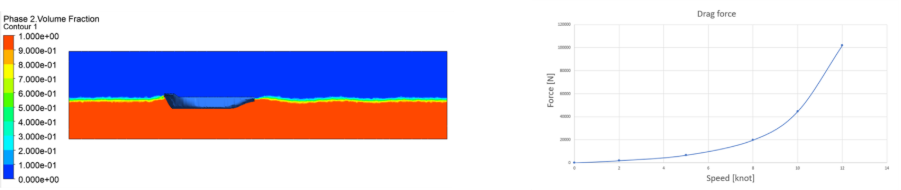
Using Volume of Fluid (VOF) modelling, CFD simulates:
- Wave interaction with hull
- Slamming loads
- Air–water volume fraction
- Sloshing behaviour in ballast and cargo tanks
Velocity vector and contour analysis at operational speeds (e.g., 8–12 knots) provides insight into how performance changes across service profiles.
For commercial vessels, this translates directly into structural risk control and operational efficiency planning.
How Structured CFD Creates Value
A robust CFD approach is not just “running software.”
It typically follows a structured path:
- Assessment of existing vessel performance and ratings
- Proposal of optimization solutions
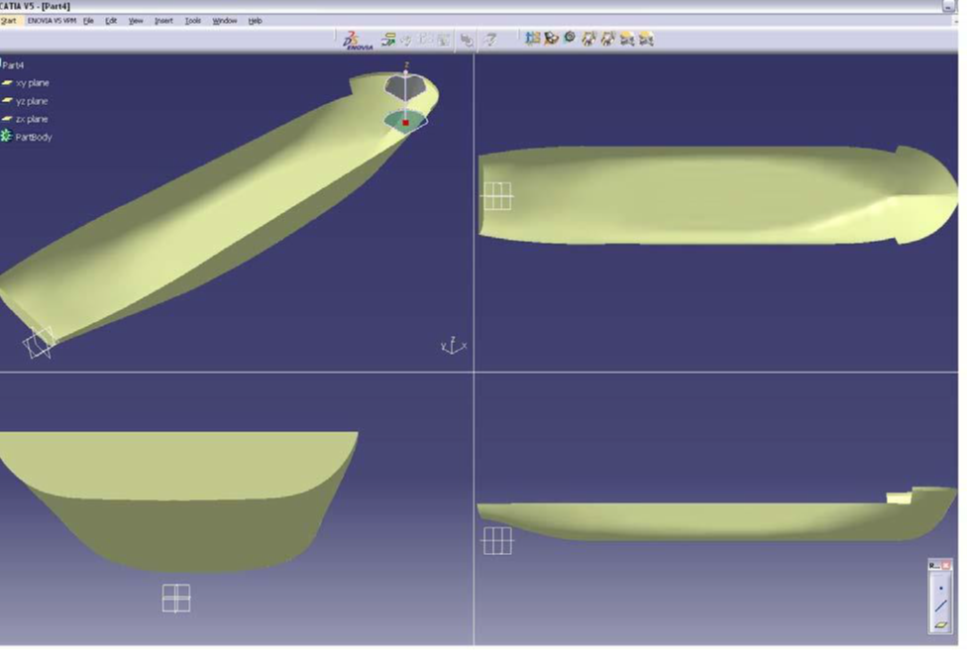
- Vessel modeling and mesh preparation
- CFD simulation (including multiphase where required)
- Validation using classical resistance methods (Holtrop, Harvald & Guldhammer)
- Detailed reporting for owner and Class review
This ensures engineering credibility — not just visual output.
The Strategic Reality
Shipping today faces:
- Fuel price volatility
- Transition to alternate fuels
- Carbon intensity benchmarking
- Increasing retrofit investments
- Charterer performance scrutiny
CFD transforms assumptions into measurable data before financial decisions are made.
However, one point is worth emphasizing:
Running simulations alone does not create value — informed interpretation does.
Mesh quality, turbulence modelling (RANS/LES), boundary conditions and validation determine whether CFD becomes an asset — or a misleading dataset.
Industry Perspective
From our experience at Umitech Marine Solutions, CFD is most effective when used as a performance verification and retrofit evaluation tool — not merely a visualization exercise.
The objective is clear:
- Select the right energy-saving solution
- Support CII and GHG alignment
- Provide Class-ready technical reporting
- Empower informed decision-making
Digital simulation must translate into operational outcome.
A Question Worth Considering
When was the last time your vessel’s total resistance profile was independently evaluated beyond sea trials?
Small flow inefficiencies compound over years.
In a margin-driven industry, small percentages matter.
If you’re evaluating hull modification, WAPS, air lubrication, or propulsion optimisation — data-driven validation should come first.